Bio Page vs Website: What Is the Difference and Which One Should You Choose?
If you run a small business, offer a service, sell a course, manage a restaurant, work as a creator, or depend on Instagram, Facebook, TikTok, or WhatsApp, you may have asked yourself:
Do I need a full website?
Or is a simple Bio Page enough for now?
The answer depends on your current stage and what you need your online presence to do.
A website is useful when you need many pages, deep content, SEO growth, a full online store, booking systems, or a more complete brand presence.
A Bio Page is useful when you want a fast, simple, organized page that collects your most important links in one place.
In simple terms:
A website is better for building a larger digital presence.
A Bio Page is better for starting quickly and keeping your links organized.
What Is a Bio Page?
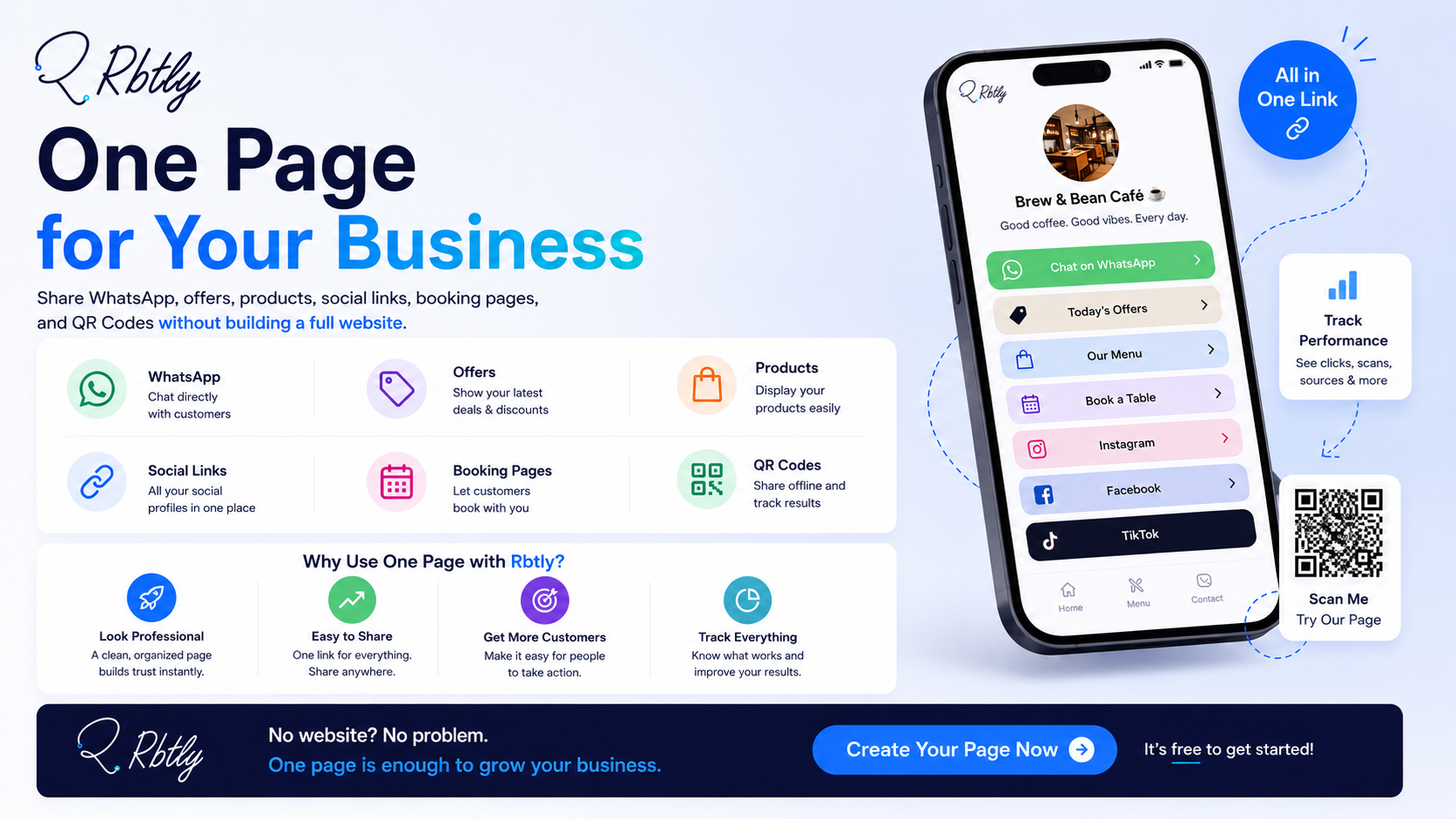
A Bio Page is a simple page that brings your most important links, offers, and contact options together in one place.
Instead of sending customers multiple links, you can send one link that contains everything they need.
For example, a Bio Page for a small business can include:
- A short description of the business.
- Products or services.
- Current offers.
- WhatsApp button.
- Instagram link.
- Facebook link.
- Location.
- Customer reviews.
- Booking or order link.
- QR Code for the page.
The goal is to reduce confusion.
Your audience should not search across many links to understand what you offer or how to contact you. A Bio Page gives them one clear destination.
Create a bio page now with Rbtly
What Is a Website?
A website is usually larger and more detailed than a Bio Page.
It can include multiple pages such as:
- Homepage.
- About page.
- Services.
- Products.
- Blog.
- Contact page.
- Booking page.
- Payment page.
- SEO landing pages.
- User accounts or internal systems in some cases.
A website is better when your business needs more content, stronger SEO, deeper trust-building, or a complete system for selling, booking, or managing customers.
But not every business needs a full website from day one.
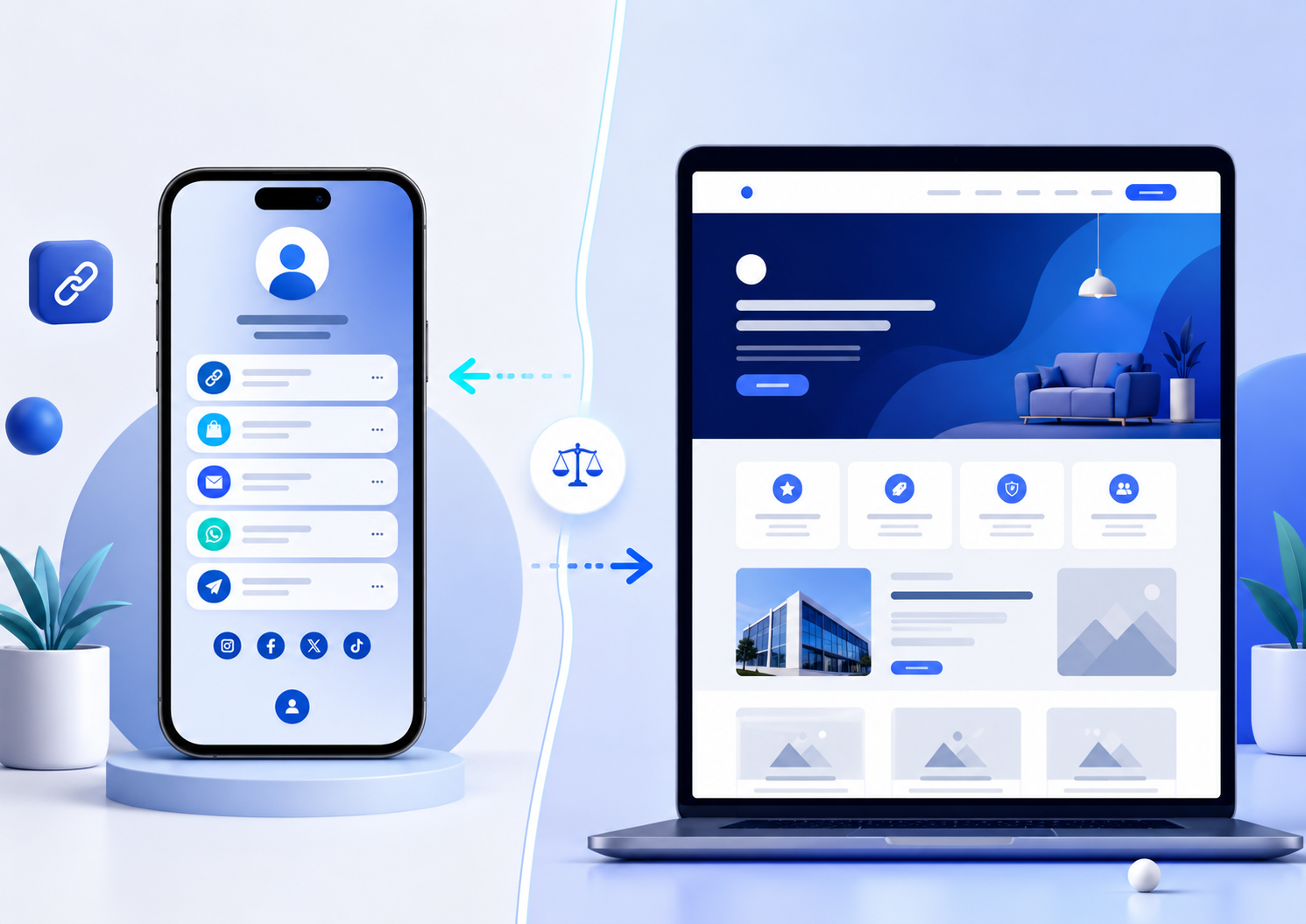
Bio Page vs Website: Quick Comparison
| Element | Bio Page | Website |
|---|---|---|
| Speed | Faster to create | Takes more time |
| Cost | Usually lower | Usually higher |
| Complexity | Simple and easy | More detailed |
| Number of pages | Usually one page | Multiple pages |
| Best for starting | Excellent | May be too much at the beginning |
| Social media use | Excellent | Useful but not always the fastest |
| SEO potential | Limited | Stronger long-term |
| Small business use | Very suitable | Better when the business grows |
| Updates | Easy and quick | May need more management |
| Main goal | Organize links and drive quick action | Build a complete digital presence |
The summary:
A Bio Page helps you start quickly and organize your links.
A website helps you build a larger and deeper online presence over time.
Start now and organize your links
When Should You Choose a Bio Page?
Choose a Bio Page when you need something fast, simple, and easy to share.
1. When You Depend on Social Media
If most of your audience comes from Instagram, Facebook, TikTok, or WhatsApp, you need one clear link to place in your bio or share in messages.
Instead of only adding a WhatsApp link, you can create a Bio Page that includes:
- WhatsApp.
- Products.
- Offers.
- Location.
- Social media links.
- Reviews.
This turns your bio link into a small organized page instead of a single random link.
2. When You Do Not Have a Website Yet
Many small businesses do not want to pay for a full website at the beginning.
That is reasonable.
If you are still testing your business, organizing your links, or creating a simple page for offers and contact, a Bio Page can be a better first step.
It does not cancel the idea of building a website later. It simply helps you start now instead of waiting weeks or months.
3. When You Send Too Many Links to Customers
If you often send customers separate links for WhatsApp, products, prices, booking, location, Instagram, and offers, you probably need one organized page.
A Bio Page reduces confusion and makes the customer journey easier.
Instead of sending five links, send one.
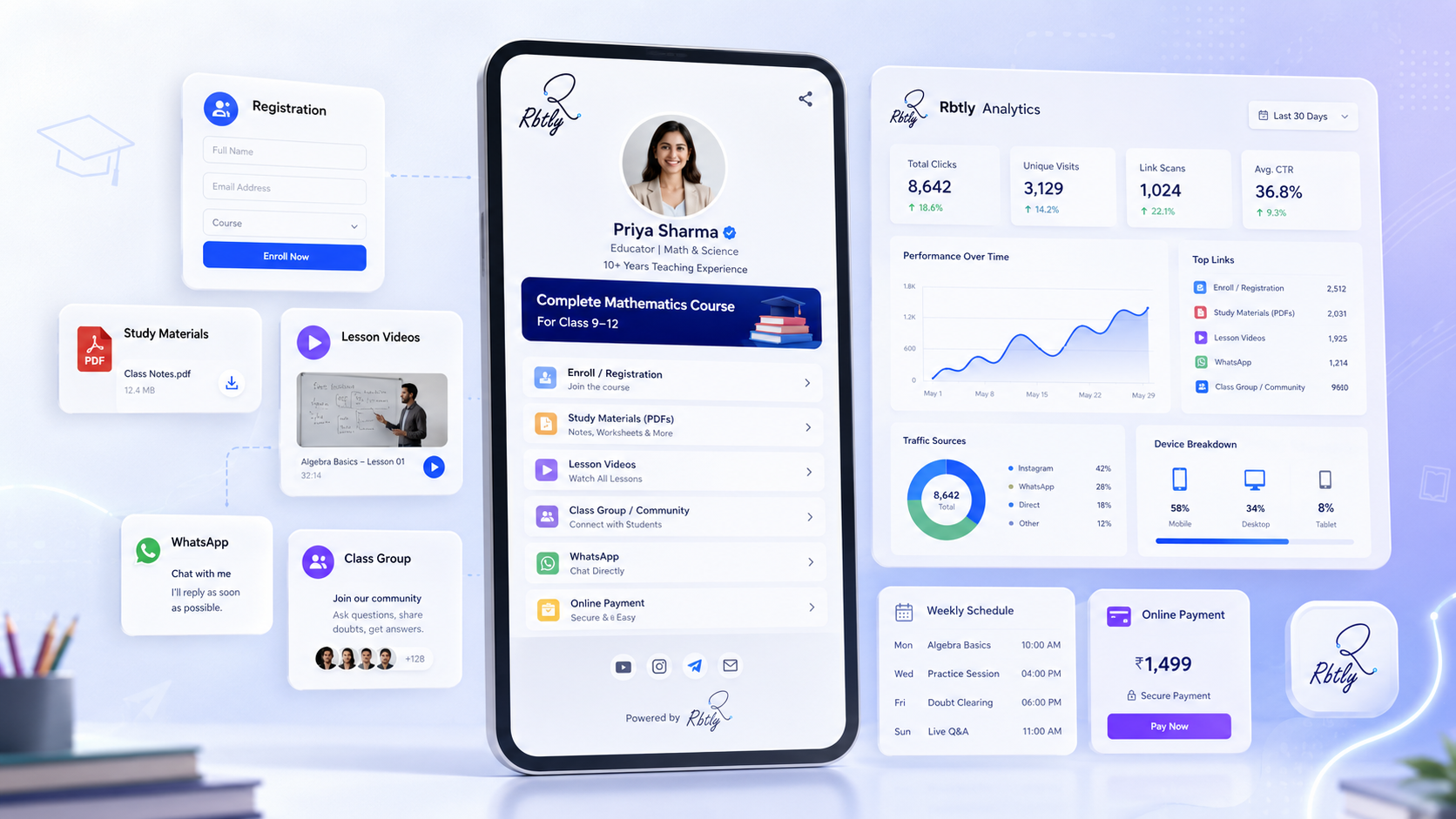
4. When You Are a Teacher or Course Provider
Teachers, trainers, and course providers often need to share several links:
- Registration link.
- Payment link.
- WhatsApp group.
- Videos.
- PDF files.
- Class schedule.
- Contact link.
Instead of sending every link separately, you can create one Bio Page or mini page for each course, class, or level.
5. When You Need a QR Code for One Clear Page
If you use flyers, business cards, restaurant menus, posters, or packaging, you can add a QR Code that opens your Bio Page.
This is often better than using a QR Code that opens only one link.
For example:
A restaurant can use a QR Code that opens a page with the menu, offers, WhatsApp, location, and delivery links.
How to Track QR Code Scans: A Quick Guide for Printed Campaigns
When Do You Need a Full Website?
A Bio Page is great for starting, but there are situations where a full website is the better choice.
1. When You Need Strong SEO
If your goal is to appear on Google for many keywords and build long-term organic traffic, a website is usually better.
Blog posts, service pages, product pages, and landing pages help you build stronger SEO over time.
2. When You Have a Lot of Content
If you have many services, products, articles, case studies, or detailed pages, a website gives you more structure.
A single Bio Page may become too limited.
3. When You Need a Full System
If you need an online store, booking system, user accounts, payment gateway, dashboard, or customer portal, you will most likely need a full website.
4. When Your Brand Is Growing
As your business grows, you may need a website that reflects your brand, supports SEO, explains your services in detail, and gives customers a deeper experience.
Is a Bio Page a Replacement for a Website?
Not always.
It is better to think of them as different tools for different stages.
A Bio Page can be enough at the beginning, especially if your business depends on social media, WhatsApp, QR Codes, and simple offers.
Later, when your business grows, you may build a full website.
Even after that, your Bio Page can still be useful as a quick link for social media.
So the relationship is not always Bio Page versus website.
Sometimes, the Bio Page is the first step, and the website is the next stage.
Why Bio Pages Are Useful for Small Businesses
Small businesses need clarity more than complexity.
Your customer wants quick answers:
- Who are you?
- What do you offer?
- Where can I see your products or services?
- How can I contact you?
- Where are you located?
- What is your current offer?
- How can I order or book?
A good Bio Page answers these questions in one place.
This makes it very useful for small businesses that sell through Instagram, Facebook, TikTok, and WhatsApp.
How Rbtly Helps You Create a Bio Page
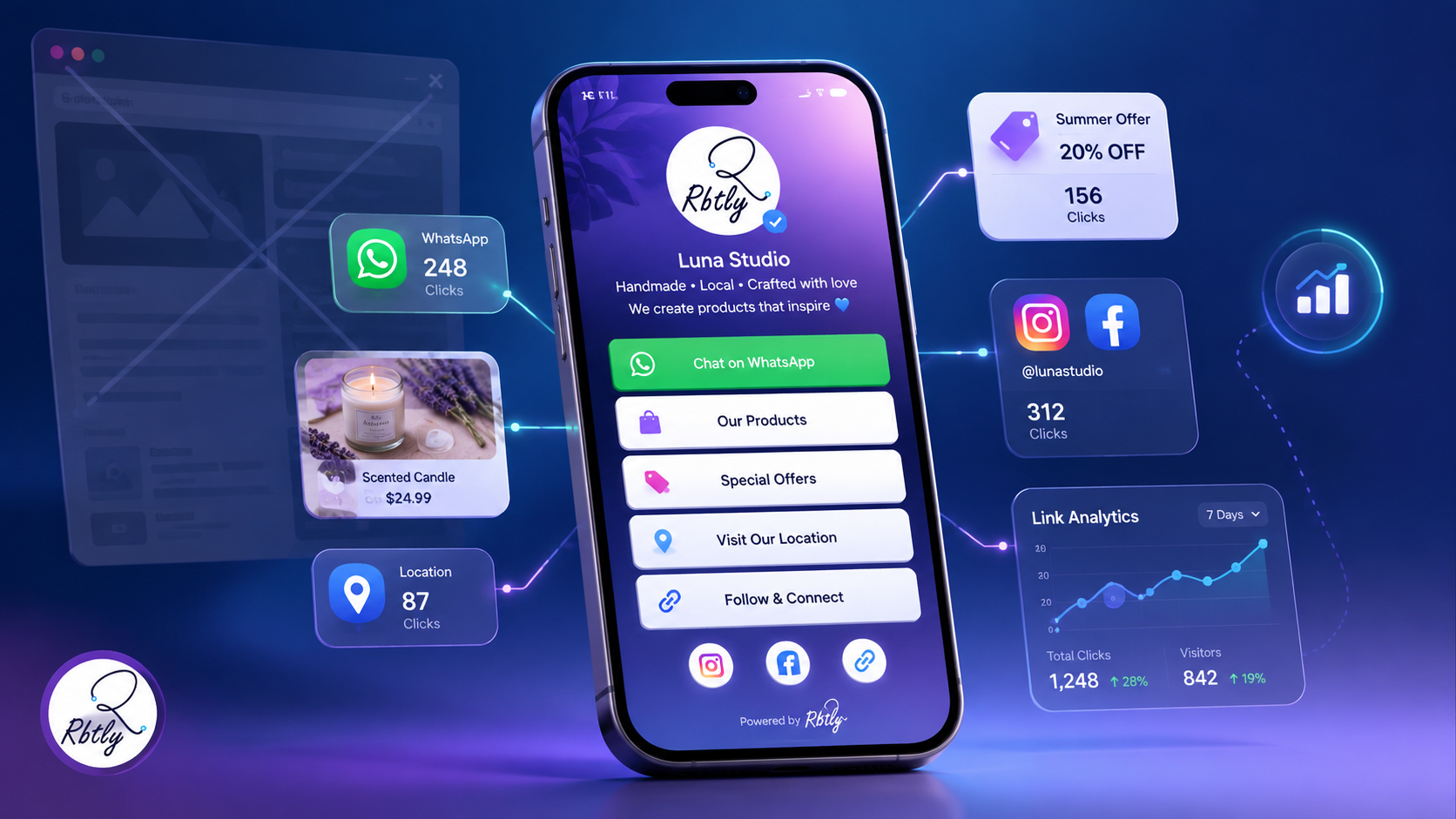
Rbtly helps you create a Bio Page or mini page that collects your links, offers, and contact options in one place.
With Rbtly, you can create a page that includes:
- Service links.
- Products or offers.
- WhatsApp button.
- Social media links.
- Location.
- Booking or payment links.
- QR Code for the page.
- Short smart links.
What Is a Smart Link? Normal Links vs Smart Links Explained - Analytics to understand what people click.
The value is not only that the page collects your links.
The bigger value is that it helps you understand what your audience does.
Did people click WhatsApp?
Did they open the offer?
Did they visit Instagram?
Did they check the products?
Did the QR Code bring visits?
How to Track QR Code Scans: A Quick Guide for Printed Campaigns
These insights help you improve your page, offers, and customer journey.
Best URL Shortener with Analytics: How to Track Every Click and Campaign
Practical Example: A Small Business Without a Website
Imagine you own a small shop or online brand that sells through Instagram and WhatsApp.
Without a Bio Page, you may only place a WhatsApp link in your bio. The customer still needs to ask about products, prices, location, and offers.
With a Bio Page, you can share one link that includes:
- Latest products.
- Monthly offer.
- WhatsApp order button.
- Location.
- Instagram.
- Customer reviews.
- QR Code for the page inside the store or on business cards.
This makes the experience easier for the customer and gives you a better understanding of what they click.
Practical Example: A Coach or Consultant
If you are a coach or consultant, you may need to share:
- A short introduction.
- Available programs.
- Booking link.
- Payment link.
- Free content.
- Community link.
- Client testimonials.
- WhatsApp or contact form.
A Bio Page helps you collect all of these links in one place instead of sending many separate links.
Practical Example: A Teacher or Training Center
If you are a teacher or training center, you can create a page for each course or level.
The page can include:
- Course description.
- Start date.
- Registration link.
- Payment link.
- WhatsApp group.
- Important files.
- Intro video.
- QR Code for students or parents.
Instead of scattered links, everything becomes organized in one simple page.
Common Bio Page Mistakes
1. Adding Too Many Links Without Order
Do not add everything randomly.
Start with the most important actions:
- Main offer or service.
- Contact button.
- Products or details.
- Social links.
- Extra information.
2. Not Having a Clear CTA
Do not only list links. Tell users what to do.
Examples:
- Book now.
- Contact us on WhatsApp.
- View current offers.
- Register for the course.
- Order the product.
3. Using Unclear Button Text
Instead of writing “Click here,” explain what will happen after the click.
Examples:
- Contact us on WhatsApp.
- View the restaurant menu.
- Register for the course.
- Open the location.
4. Not Checking Analytics
If you do not review your analytics, you lose one of the biggest benefits.
Check what people click, then improve your link order, offers, and CTA buttons based on real behavior.
Best URL Shortener with Analytics: How to Track Every Click and Campaign
When Should You Start with a Bio Page and When Should You Move to a Website?
Start with a Bio Page if:
- You are at the beginning of your business.
- You do not have a website.
- You depend on social media.
- You need one link for your bio.
- You send many links to customers.
- You want a QR Code that opens one organized page.
- You want to track clicks easily.
Move to a website when:
- You need stronger SEO.
- You have a lot of content.
- You have many products or services.
- You need a store or booking system.
- You want a larger digital presence.
- You need multiple brand pages.
The best choice is the one that fits your current stage, not just the one that looks bigger.
Conclusion
The difference between a Bio Page and a website is not that one is always better than the other.
Each one has a different role.
A Bio Page is useful for quick setup, link organization, social media, WhatsApp, QR Codes, and small businesses that need a clear page without complexity.
A website is useful when you need stronger SEO, more content, multiple pages, or a full online system.
If you are starting out or depend heavily on social media, start with an organized Bio Page.
With Rbtly, you can create a page that collects your links, offers, WhatsApp, social media, QR Code, and analytics in one place.
Start with a simple page and let every click teach you something about your audience.
FAQ
What is the difference between a Bio Page and a website?
A Bio Page is one simple page that collects your most important links and information. A website is usually larger, with multiple pages and more detailed content.
Can a Bio Page replace a website?
At the beginning, yes, it can be enough for many small businesses. But it may not replace a full website if you need strong SEO, an online store, booking system, or a lot of content.
When should I use a Bio Page?
Use a Bio Page if you depend on social media, need one link in your bio, send many links to customers, or want a simple page for offers and contact.
When do I need a website?
You need a website if you have a lot of content, many services, an SEO strategy, an online store, booking system, or a growing brand that needs multiple pages.
Is a Bio Page good for small businesses?
Yes. A Bio Page is very useful for small businesses because it helps them look organized without the cost or complexity of a full website.
Can I use a QR Code with a Bio Page?
Yes. You can add a QR Code to flyers, menus, business cards, or posters so people can open your Bio Page and find all important links in one place.
Can Rbtly help me track Bio Page clicks?
Yes. Rbtly helps you track clicks and understand how people interact with your links and pages, so you can see what your audience cares about most.