How to Track QR Code Scans: A Quick Guide for Flyers, Menus, and Printed Campaigns
Printing a QR code on a flyer, menu, business card, poster, or product package is a good step. But the more important question is: did people actually scan it?
Did you know how many people scanned the code?
Did the flyer generate engagement?
Is your digital menu being opened?
Did the business card, poster, or packaging help people reach your offer, WhatsApp link, or registration page?
This is where QR code tracking becomes important.
Instead of using a QR code as just another design element, you can turn it into a measurement tool that helps you understand what happens after someone scans it.
What Does QR Code Tracking Mean?
QR code tracking means measuring the performance of your QR code after people use it.
Instead of only creating a code that opens a link, you track how that code performs.
Depending on the platform you use, QR code tracking can help you understand:
- How many scans the code received.
- How the code performed over time.
- Which QR code performed better.
- Which campaign or design generated more engagement.
- How the code connects to a link, page, or measurable campaign.
The goal is simple: a QR code should not only help people reach a link. It should also help you understand whether people used it.
Static QR vs Dynamic QR: Differences, Use Cases, and Best Choice for Marketing
Why Is QR Code Tracking Important?
Because marketing without measurement becomes guessing.
Many businesses print flyers, menus, posters, business cards, or packaging with QR codes. But after printing, they do not know whether people actually used the code.
QR code tracking helps you answer questions like:
- Did people scan the code?
- Was the QR code visible enough in the design?
- Was the offer attractive?
- Did the flyer perform well?
- Is the digital menu being used?
- Did the business card or packaging bring visits?
- Is the campaign worth repeating?
This turns printed materials from a simple cost into a marketing channel you can measure and improve.
Can You Track a QR Code After Printing?
You can track a QR code after printing only if it was created in a trackable way from the beginning.
In other words, tracking should start before printing, not after it.
If you already printed a normal QR code that was not created through a tracking platform, you may not be able to measure scans accurately.
So, if you are planning to print a flyer, menu, business card, poster, or package, it is better to create a trackable QR code from the start.
How to Track QR Code Scans Correctly
1. Define the Goal of the QR Code
Before creating the QR code, ask yourself: what do I want people to do after scanning it?
Do you want them to open:
- A menu?
- A special offer?
- A WhatsApp link?
- A registration page?
- A product page?
- A booking form?
- A review page?
The clearer the goal, the easier it is to measure performance.
2. Use a Mobile-Friendly Link or Page
Most people scan QR codes from their phones, so the page behind the code must work well on mobile.
Make sure the page:
- Loads quickly.
- Looks clear on mobile.
- Has a clear CTA.
- Shows the offer or information directly.
- Does not require too many steps.
If the page is confusing or slow, you may get scans but not real results.
3. Create a Trackable QR Code
Use a platform that helps you create a measurable QR code instead of a normal QR code with no analytics.
With Rbtly, you can create a QR code and connect it to:
- A short link.
- A Bio page.
- A Landing page.
- A WhatsApp link.
- A menu.
- A special offer.
- A registration page.
- A marketing campaign.
This makes the QR code part of your campaign, not just an image inside the design.
4. Test the QR Code Before Printing
Before printing any material that includes a QR code, test it on more than one device.
Check that:
- The code is easy to scan.
- The link opens correctly.
- The page works well on mobile.
- The code is clear in the design.
- The size is suitable.
- There is enough white space around it.
Testing the QR code before printing protects you from costly mistakes.
5. Add a Clear CTA Next to the Code
Do not place the QR code alone without explanation.
Add a simple call-to-action such as:
- Scan to view the menu.
- Scan to get the offer.
- Scan to register now.
- Scan to contact us.
- Scan to view the details.
A clear CTA increases the chance that people will scan the code.
6. Review the Results After Publishing
After distributing the flyer, using the menu, or printing the business cards, review the QR code performance.
Ask:
- Did the code get scans?
- Is the number of scans reasonable compared to the number of printed materials?
- Did one QR code perform better than another?
- Was the code placement clear?
- Did the CTA work?
- Did the page encourage people to take action?
These questions help you turn data into better decisions.
Best Uses for Trackable QR Codes
1. Flyers
If you distribute flyers without tracking, you only know that they were distributed.
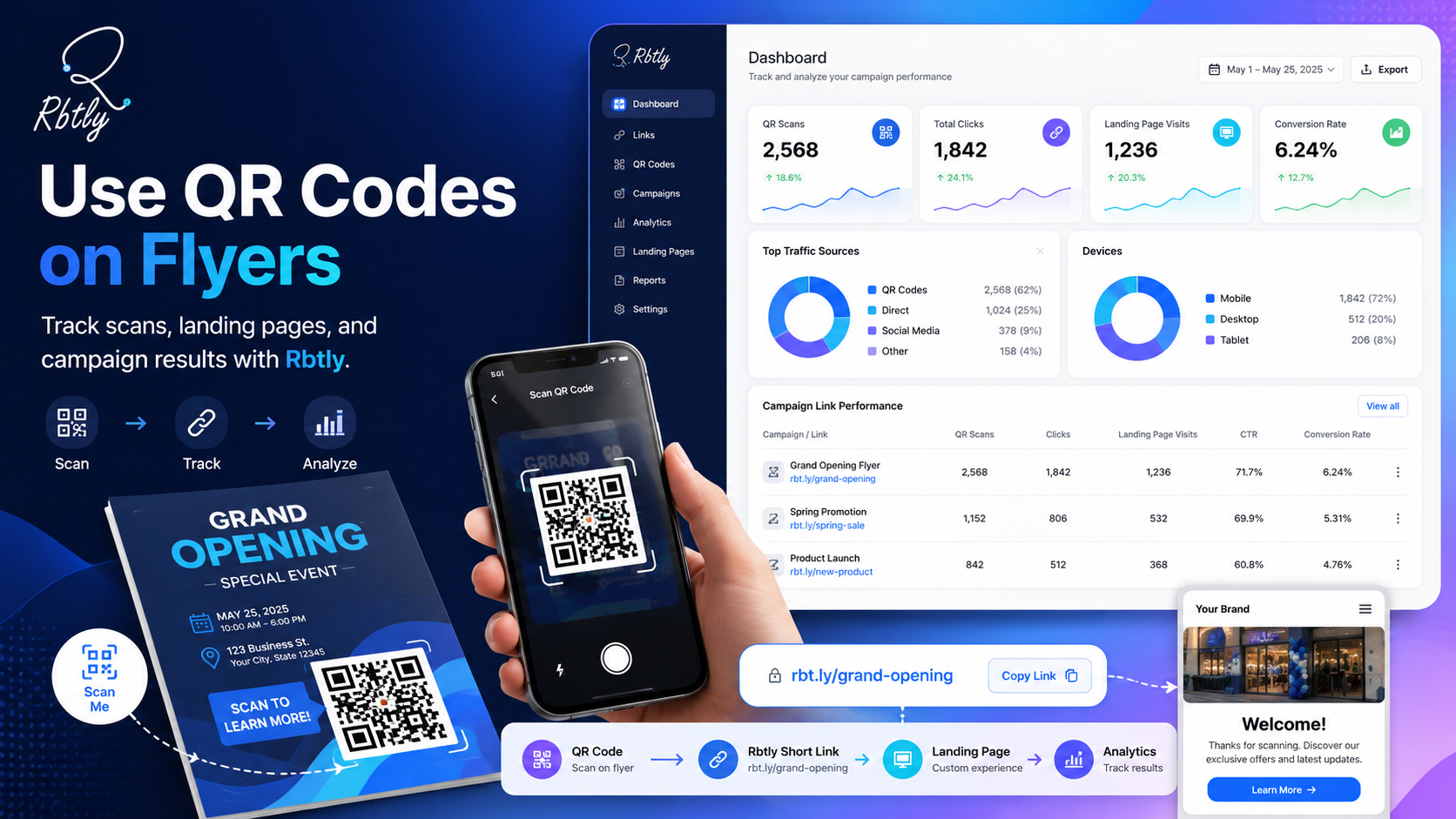
With a trackable QR code, you can understand whether people actually interacted with the flyer.
2. Restaurant Menus
Restaurants and cafes can use QR code tracking to see whether customers open digital menus or special offers.
3. Business Cards
A business card can open a page with your services, portfolio, WhatsApp link, and social media accounts. With tracking, you can understand whether people interacted with the card after receiving it.
4. Packaging
You can place a QR code on product packaging to open an offer, review page, product instructions, or WhatsApp link. Tracking helps you understand whether customers used it after purchase.
5. Events
For exhibitions, workshops, and conferences, QR codes can be used for registration, event schedules, file downloads, or post-event surveys.
Static QR vs Dynamic QR: Differences, Use Cases, and Best Choice for Marketing
Common QR Code Tracking Mistakes
1. Creating a Normal QR Code and Expecting Analytics Later
If you do not create the QR code through a tracking tool from the beginning, you may not be able to measure performance after printing.
2. Using the Same QR Code Everywhere
If you use the same QR code on flyers, menus, posters, and business cards, you will not know which placement generated the scans.
It is better to create a separate QR code for each important use case.
3. Not Testing the Code Before Printing
Printing a QR code before testing it can create expensive mistakes.
Always test the code before using it.
4. Not Adding a CTA
The QR code alone is not enough.
Tell people why they should scan it.
5. Placing the QR Code in a Crowded Design
If the design is too crowded or the QR code is too small, it may be hard to scan.
Keep the code clear and easy to notice.
How Rbtly Helps You Track QR Codes
Rbtly helps you create QR codes and connect them to smart links, pages, and measurable campaigns.
What Is a Smart Link? Normal Links vs Smart Links Explained
With Rbtly, you can create a QR code that opens:
- A short link.
- A Bio page.
- A Landing page.
- A WhatsApp link.
- A menu.
- A special offer.
- A registration page.
- A marketing campaign.
You can also use QR codes as part of a wider system that includes:
- Short links.
- Bio pages.
- Landing pages.
- Click tracking.
- Campaign tracking.
- CTA overlays.
- Analytics that help you understand performance.
This makes Rbtly useful for business owners, restaurants, designers, agencies, teachers, coaches, and creators who want to turn QR codes into real measurement tools.
Conclusion
QR code tracking is the difference between printing a code and waiting and printing a code while knowing what happened after people scanned it.
If you use a QR code on a flyer, menu, business card, poster, package, or campaign, do not think of it as just a design element.
Think of it as a measurement tool.
A trackable QR code helps you understand:
- How many people interacted.
- Which design or channel performed better.
- Whether the campaign is worth repeating.
- Whether the page or offer needs improvement.
- Whether your printed materials generated real action.
With Rbtly, you can create QR codes and connect them to smart links, organized pages, and analytics that help you understand campaign performance.
FAQ
What does QR code tracking mean?
QR code tracking means measuring the performance of a QR code after people scan it, such as tracking scan numbers and connecting the code to a campaign, link, or page.
Can I know how many people scanned my QR code?
Yes, if the QR code was created through a platform that supports tracking
Can I track a QR code after printing?
You can track it after printing only if it was created as a trackable QR code from the beginning. That is why it is better to set up tracking before printing.
Does a normal QR code provide analytics?
In most cases, a normal QR code does not provide clear analytics. It is better for simple uses that do not require measurement.
Is Dynamic QR suitable for flyers?
Yes. Dynamic QR is very suitable for flyers because it helps you track scans and measure whether people interacted with the campaign.
Is Dynamic QR suitable for restaurant menus?
Yes. It helps restaurants and cafes understand whether customers are using QR codes to open menus or offers.
What should I do before printing a QR code?
Test the code on more than one device, confirm the final link, use a clear size, leave enough white space around the code, and add a clear CTA next to it.