QR Codes for Print Shops: 9 Powerful Ways to Offer Trackable QR Codes to Clients
QR Codes for Print Shops are no longer just small black-and-white codes added to flyers, menus, business cards, or posters. They can become a valuable service that helps clients track scans, measure campaign results, and improve printed marketing performance.
Many print shops already create QR Codes for clients. But in most cases, the QR Code is treated as a simple design element. The client receives the printed material, but they do not know how many people scanned the code or whether the campaign worked.
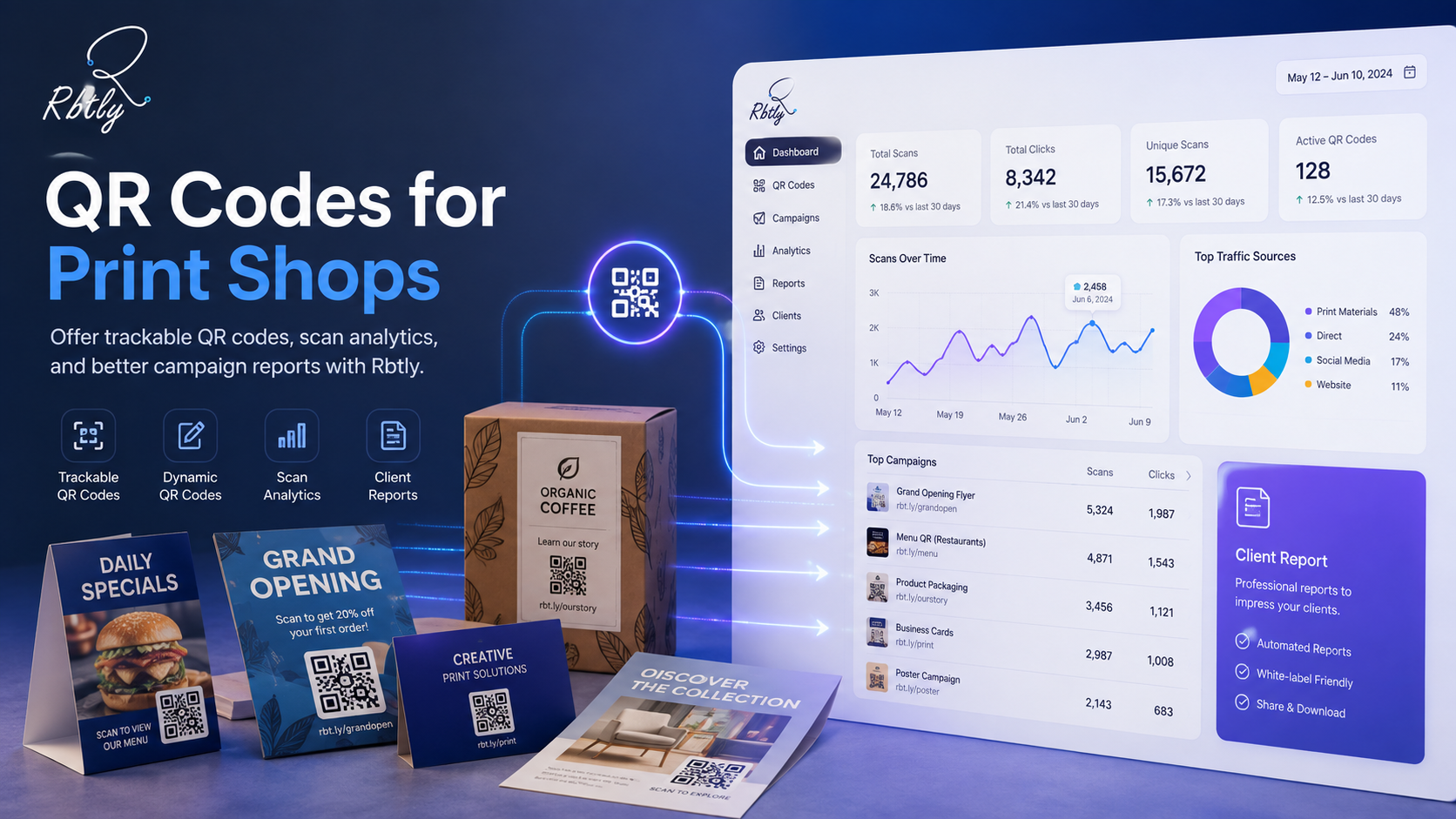
That is why QR Codes for Print Shops can become a stronger business opportunity. With Rbtly, print shops can offer trackable QR Codes, Dynamic QR Codes, scan analytics, and better reporting to clients.
Create trackable QR Codes for your print clients with Rbtly
Table of Contents
- What are QR Codes for Print Shops?
- Why print shops should offer trackable QR Codes
- 9 ways print shops can use QR Codes for clients
- Static QR Codes vs Dynamic QR Codes for print shops
- What clients can track from printed QR Codes
- How to sell trackable QR Codes as a print shop service
- Why use Rbtly for QR Codes for Print Shops?
- QR Codes for Print Shops checklist
- FAQ
What are QR Codes for Print Shops?
QR Codes for Print Shops are QR Codes created for printed materials such as flyers, posters, menus, brochures, packaging, business cards, stickers, banners, table cards, and event materials.
A normal QR Code can send users to a website, form, menu, WhatsApp link, Bio Page, landing page, or product page.
But trackable QR Codes give print shops and clients more value.
Instead of only printing a QR Code, the print shop can help the client measure whether people scanned the code and interacted with the campaign.
This turns QR Codes from a simple design add-on into a measurable marketing service.
For print shops, this can create a stronger client relationship and a better reason for clients to return for future campaigns.
Why print shops should offer trackable QR Codes
Many clients want printed materials, but they also want to know if those materials worked.
A restaurant may print menu cards. A gym may print flyers. A clinic may print appointment cards. A school may print course brochures. An event organizer may print badges and posters.
In all these cases, the client may ask one important question:
Did people scan the QR Code?
This is where QR Codes for Print Shops become more valuable.
When print shops offer trackable QR Codes, they can help clients understand campaign performance instead of only delivering printed materials.
This gives the print shop a stronger position because the service becomes connected to marketing results, not just printing output.
9 ways print shops can use QR Codes for clients
QR Codes for Print Shops can be used across many client projects. Here are practical ways print shops can offer QR Codes as part of their services.
1. QR Codes on flyers
Flyers are one of the most common printed marketing materials.
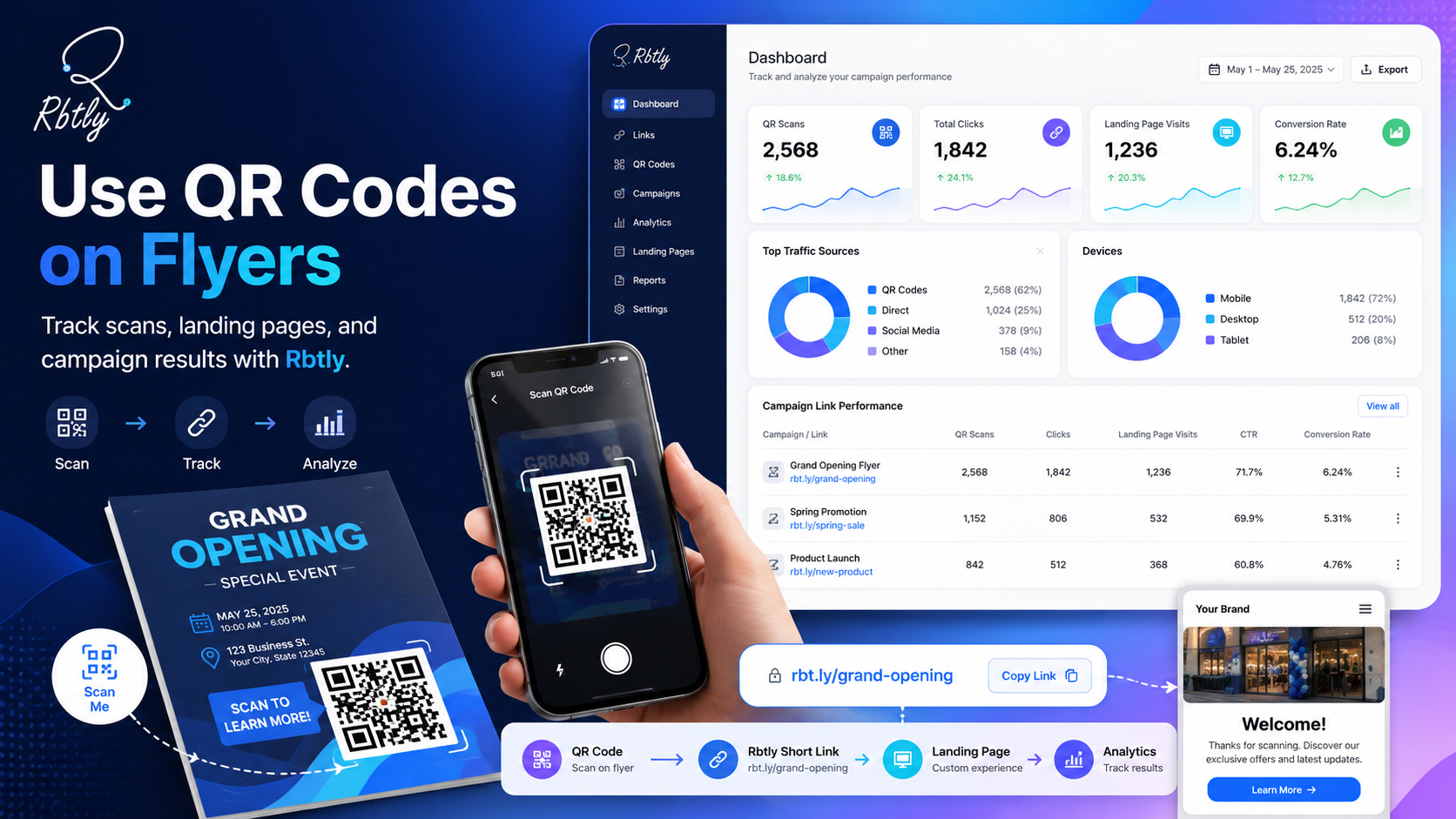
A print shop can add a trackable QR Code to a flyer so the client can measure scans and clicks after distribution.
The QR Code can send users to a landing page, WhatsApp link, offer page, registration form, menu, product page, or Bio Page.
This helps the client understand whether the flyer generated interest.
You can also read: How to Use QR Codes on Flyers and Track Results.
2. QR Codes on restaurant menus
Restaurants and cafes often ask print shops to design and print menus, table cards, posters, and delivery flyers.
Adding a QR Code to these materials can help customers open a digital menu, WhatsApp ordering link, delivery page, or special offer.
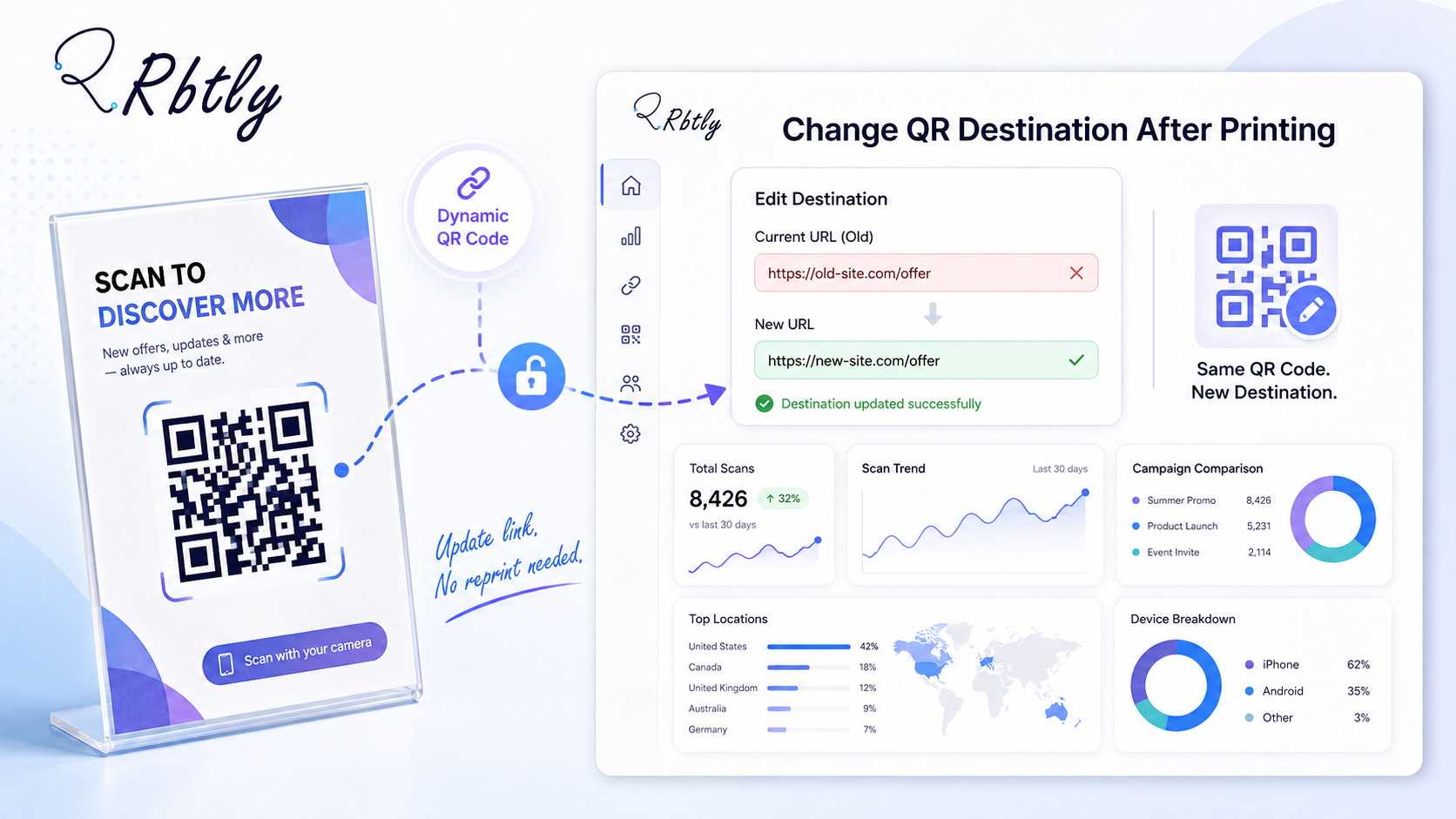
With Dynamic QR Codes, the restaurant can update the destination later without changing the printed QR Code shape.
This is useful when menu items, prices, offers, or ordering links change.
You can read more here: QR Code Menu for Restaurants and Cafes.
3. QR Codes on business cards
Business cards can become more useful when they include QR Codes.
A QR Code on a business card can send people to a Bio Page, portfolio, booking page, WhatsApp link, contact page, or social media profile.
This gives clients a better way to connect with people after meetings or events.
For print shops, offering QR Codes on business cards can make the card more modern and useful.
4. QR Codes on posters and banners
Posters and banners are used for events, retail promotions, clinics, schools, gyms, real estate campaigns, restaurants, and local offers.
With trackable QR Codes, clients can measure which posters or locations generate more scans.
For example, a client can use one QR Code for a poster at the entrance and another QR Code for a poster inside the venue.
This helps the client compare placement and performance.
5. QR Codes on product packaging
Product packaging can include QR Codes that send customers to instructions, product videos, warranty forms, customer support, feedback forms, loyalty programs, or special offers.
Trackable QR Codes help brands understand whether customers engage with the package after purchase.
This gives print shops an opportunity to offer more valuable packaging services.
6. QR Codes for events
Events can use QR Codes on tickets, badges, brochures, posters, booth materials, schedules, maps, sponsor pages, and feedback forms.
A print shop can offer trackable QR Codes for each event material.
This helps event organizers know which materials attendees scanned most.
It also helps sponsors and organizers understand engagement during and after the event.
7. QR Codes for schools and course providers
Schools, academies, instructors, and course creators often print brochures, flyers, registration forms, and posters.
A QR Code can send students or parents to a registration page, WhatsApp group, course details, payment link, schedule, or Bio Page.
Trackable QR Codes help the client know which printed materials generated interest.
This is useful for education marketing and course promotion.
8. QR Codes for real estate print materials
Real estate agents and agencies often use printed brochures, window posters, flyers, and property signs.
A QR Code can send potential buyers or renters to a property page, video tour, WhatsApp chat, location map, lead form, or booking page.
With QR Code tracking, real estate clients can understand which printed assets attract more attention.
9. QR Codes for client campaign reports
The biggest opportunity for print shops is not only creating QR Codes, but also helping clients understand performance.
If a print shop creates trackable QR Codes through Rbtly, it can give clients simple reports about scans and clicks.
This makes the print shop more valuable because it connects printing with measurable marketing results.
Static QR Codes vs Dynamic QR Codes for print shops
Print shops should understand the difference between Static QR Codes and Dynamic QR Codes before offering QR Code services to clients.
Feature | Static QR Code | Dynamic QR Code |
|---|---|---|
Change destination after printing | No | Yes |
Keep the same printed QR Code shape after updating | No, usually a new code is needed | Yes |
Track scans | Limited or not available | Yes, depending on the platform |
Useful for client campaigns | Limited | Strong |
Best for printed materials that may change | No | Yes |
For simple fixed links, a Static QR Code may be enough.
But for client campaigns, printed offers, menus, flyers, packaging, and events, Dynamic QR Codes are usually more practical.
With Rbtly Dynamic QR Codes, clients can update the destination link later without changing the printed QR Code shape.
You can learn more here: How to Change a QR Code Destination After Printing.
What clients can track from printed QR Codes
QR Codes for Print Shops become more valuable when they include tracking and analytics.
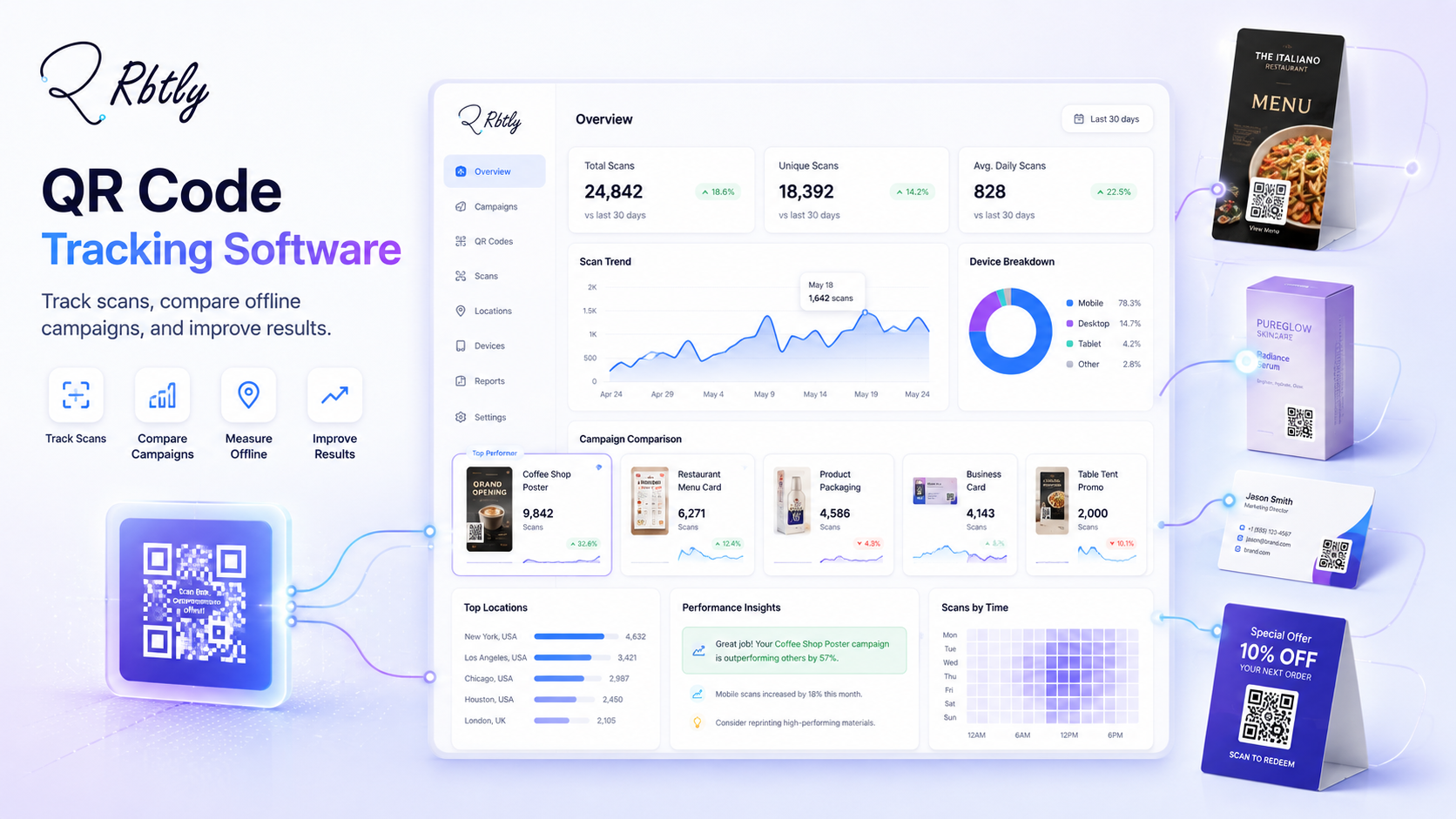
Clients can use QR Code tracking to understand:
- How many people scanned the QR Code.
- Which flyer, menu, poster, or business card performed better.
- Which location generated more scans.
- Which campaign brought more clicks.
- Which QR Code destination got more engagement.
- Whether users clicked a WhatsApp link after scanning.
- Whether a Bio Page link received clicks.
- Whether a printed campaign should be repeated or improved.
This type of reporting can help clients make better marketing decisions.
It also gives print shops a strong reason to offer QR Codes as a measurable service.
You can also read: QR Code Tracking Software: How to Measure Offline Campaigns.
How to sell trackable QR Codes as a print shop service
Print shops can position QR Codes as an added-value service instead of a free design extra.
The message to clients can be simple:
“We can add a QR Code to your printed material, and you can track how many people scanned it.”
This is easy for clients to understand because it connects directly to campaign value.
Offer it as a campaign upgrade
When a client orders flyers, posters, menus, or cards, offer a trackable QR Code as an upgrade.
Explain that it helps them measure the results of the printed campaign.
Create packages
Print shops can create simple packages such as:
- Basic QR Code for fixed links.
- Trackable QR Code with scan analytics.
- Dynamic QR Code with editable destination.
- QR Code plus Bio Page for multiple links.
- QR Code plus monthly performance summary.
This makes the QR Code service easier to sell.
Use simple reporting
Clients do not always need complex reports.
A simple report can show scans, clicks, top campaign links, and basic performance notes.
This helps the client see value and may encourage them to print more campaigns in the future.
Explain the benefit clearly
Do not explain QR Codes only as a technical feature.
Explain the business benefit:
- Measure printed campaign performance.
- Update links without reprinting.
- Send customers to WhatsApp, offers, menus, or Bio Pages.
- Compare different printed materials.
- Make better decisions for the next campaign.
Why use Rbtly for QR Codes for Print Shops?
Rbtly helps print shops create QR Codes that are more useful for clients.
Instead of creating basic QR Codes only, print shops can use Rbtly to create trackable QR Codes, Dynamic QR Codes, Bio Pages, and short links.
This makes Rbtly useful for QR Codes for Print Shops because it supports both the printed material and the tracking behind it.
With Rbtly, print shops can:
- Create QR Codes for client campaigns.
- Create Dynamic QR Codes.
- Update QR Code destinations later.
- Keep the same printed QR Code shape after updating.
- Track QR Code scans.
- Create short links for campaign tracking.
- Create Bio Pages for clients.
- Connect printed materials with digital actions.
- Offer clients better reporting and campaign value.
Explore Rbtly QR Codes here: Rbtly QR Codes.
You can also learn more about creating helpful digital experiences from Google Search Central.
QR Codes for Print Shops checklist
Use this checklist before offering QR Codes to clients.
- Ask the client what action they want after the scan.
- Choose the right destination: WhatsApp, landing page, Bio Page, menu, form, or offer.
- Use a Dynamic QR Code if the destination may change.
- Create separate QR Codes for different campaigns or materials.
- Test the QR Code before printing.
- Make sure the QR Code is large enough and easy to scan.
- Add a clear CTA near the QR Code.
- Track scans and clicks after printing.
- Prepare a simple performance summary for the client.
- Use the data to recommend the next campaign.
This checklist helps print shops deliver QR Codes as a professional service, not just a design element.
Final thoughts
QR Codes for Print Shops can become a strong added-value service.
Instead of only printing flyers, menus, posters, packaging, or business cards, print shops can help clients connect printed materials with digital actions.
Trackable QR Codes allow clients to measure scans, compare materials, update destinations, and understand whether their printed campaigns worked.
With Rbtly, print shops can offer QR Codes, Dynamic QR Codes, Bio Pages, short links, and campaign tracking in a simple way.
This can help print shops provide more value, improve client reporting, and create stronger long-term client relationships.
Start creating trackable QR Codes for print clients with Rbtly
FAQ
What are QR Codes for Print Shops?
QR Codes for Print Shops are QR Codes created for printed materials such as flyers, menus, posters, business cards, packaging, banners, brochures, and event materials. They can help clients connect print campaigns with digital actions.
Why should print shops offer trackable QR Codes?
Print shops should offer trackable QR Codes because they help clients measure scans, clicks, and campaign performance. This makes printed materials more valuable.
Can print shops offer Dynamic QR Codes?
Yes. With Rbtly, print shops can create Dynamic QR Codes for clients. Clients can update the destination link later without changing the printed QR Code shape.
What printed materials can include QR Codes?
QR Codes can be added to flyers, menus, posters, business cards, packaging, brochures, banners, stickers, event badges, tickets, table cards, and product labels.
Can QR Codes help clients measure flyer performance?
Yes. Trackable QR Codes can help clients measure flyer scans and clicks, compare flyer versions, and understand which campaign performed better.
Can a QR Code send people to WhatsApp?
Yes. A QR Code can send users to a WhatsApp link, and with Rbtly, that link can be trackable so clients can measure clicks.
Can QR Codes send users to Bio Pages?
Yes. QR Codes can send users to Bio Pages that include multiple links, such as WhatsApp, offers, products, social media, location, forms, and payment links.
How can print shops sell QR Code tracking to clients?
Print shops can sell QR Code tracking as a campaign upgrade. They can explain that clients will not only print materials, but also measure scans, track clicks, and understand campaign performance.