Static QR vs Dynamic QR: Differences, Use Cases, and Which One Is Better for Marketing Campaigns?
Not all QR codes are the same.
At first glance, a QR code may look like a small square that people scan with their phones. But when it comes to marketing, tracking, and campaign performance, there is an important difference between two main types: Static QR and Dynamic QR.
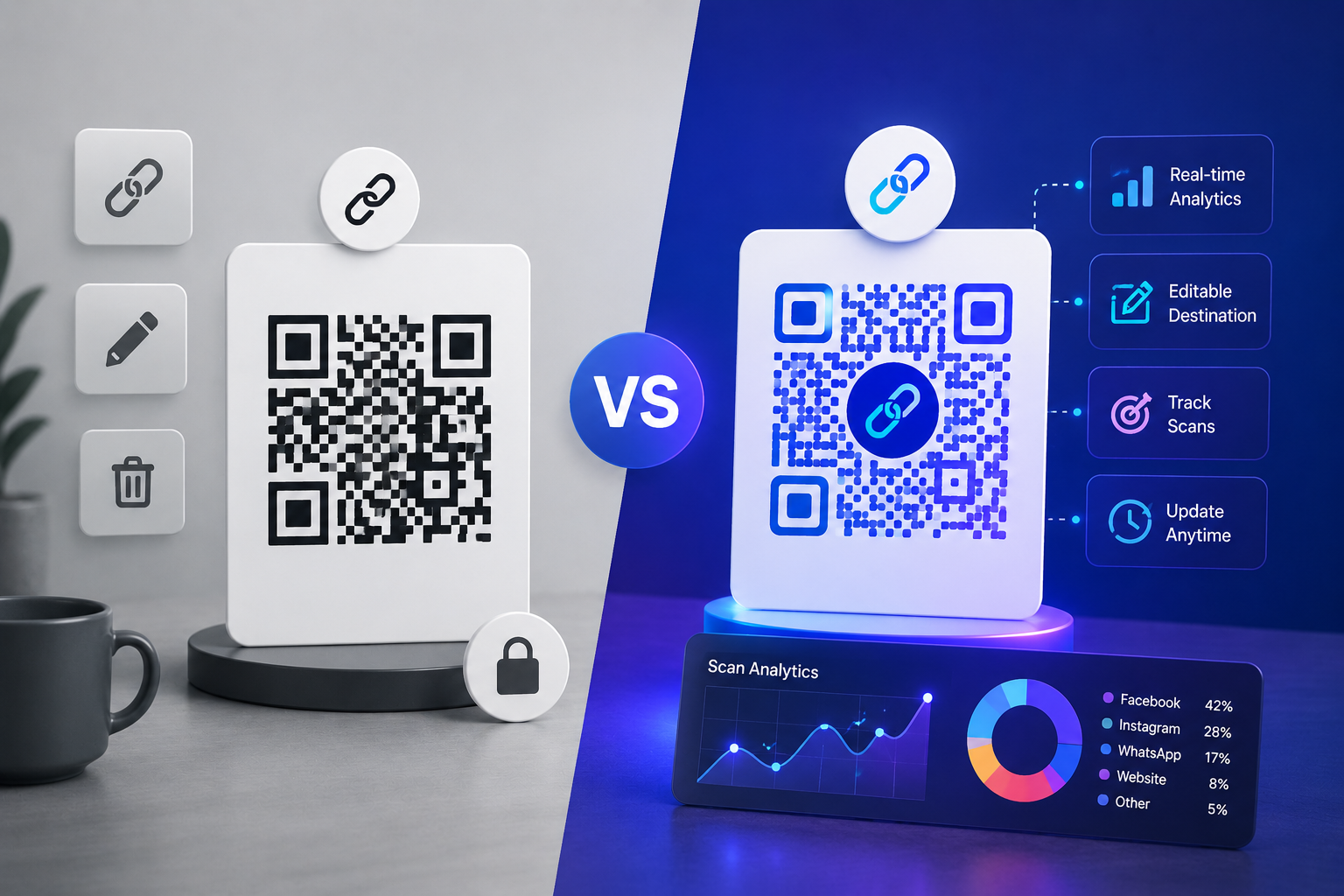
A Static QR Code is a fixed QR code created with specific information or a specific link. It usually does not give you much flexibility in management or tracking.
A Dynamic QR Code, on the other hand, is created and managed through a platform. It can be connected to smart links, landing pages, bio pages, or campaigns, with the ability to track performance and scan activity depending on the platform’s capabilities.
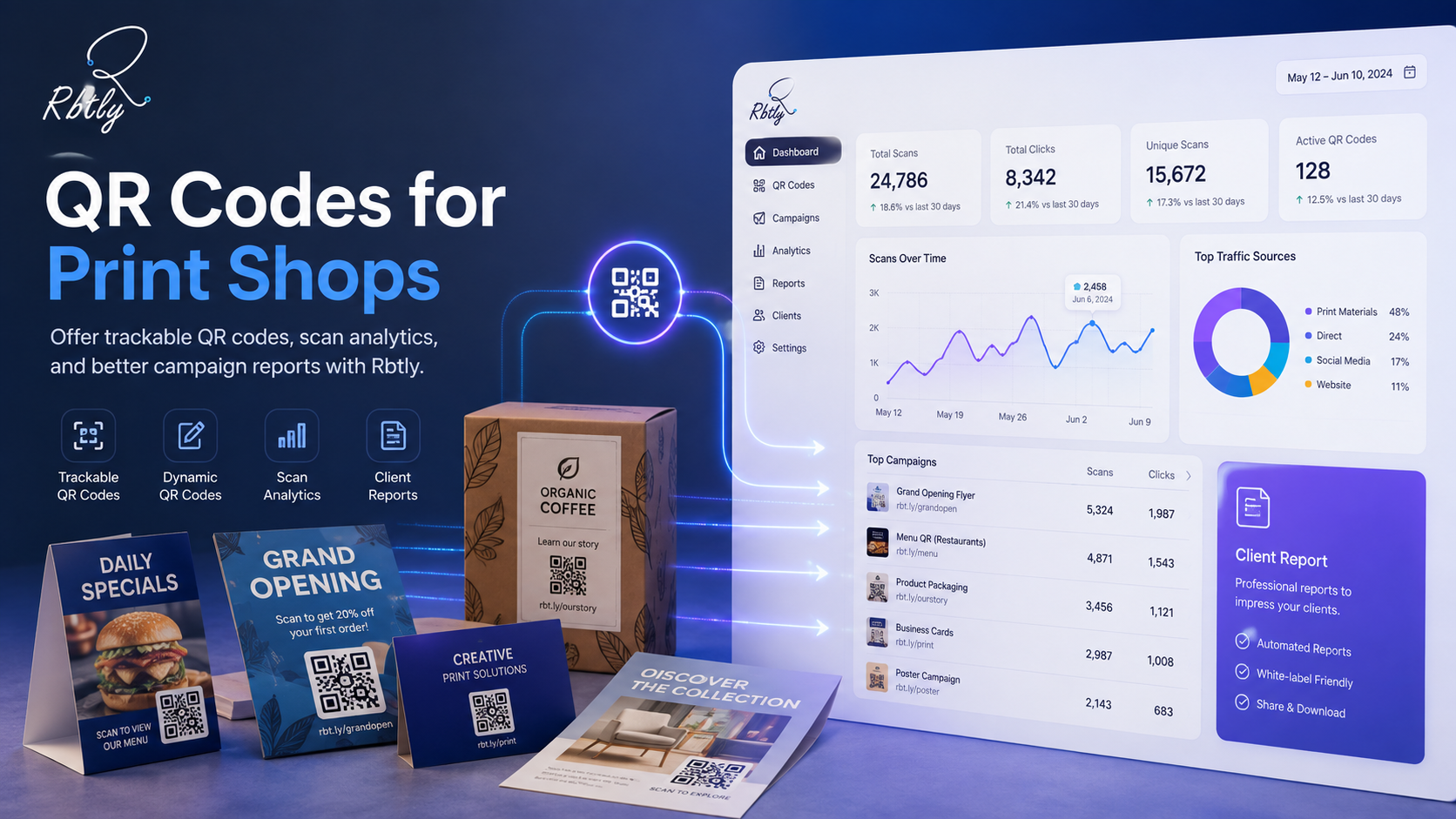
This difference matters a lot if you use QR codes for restaurant menus, flyers, business cards, posters, product packaging, printed ads, events, or marketing campaigns.
What Is a Static QR Code?
A Static QR Code is a fixed QR code that contains the data or link directly inside the code.
Once the code is created, it is tied to the information entered at the time of creation. If the QR code opens a specific link, it will usually continue to point to that same link and may not offer much flexibility for management or tracking.
For example:
If you create a Static QR Code for a restaurant menu link, then later want to change the link or track how many people scanned the code, this type may not be suitable, especially if the code has already been used in printed materials.
Static QR is more suitable for simple and fixed uses that do not require analytics or ongoing campaign management.
When Is Static QR Suitable?
Static QR can be useful when the content is fixed and does not need to be changed, managed, or tracked.
Examples include:
- Sharing Wi-Fi details.
- Displaying fixed text.
- Sharing a phone number.
- Sharing basic contact details.
- Linking to a stable page that does not change.
- Personal or internal use that is not related to a marketing campaign.
- A QR code whose performance you do not need to measure later.
But if you are using a QR code in an ad, campaign, flyer, menu, business card, poster, or product packaging, it is usually better to consider Dynamic QR because it gives you more control, tracking, and organization.
Limitations of Static QR Code in Marketing
Although Static QR is simple and easy to create, it has clear limitations when used for marketing and performance measurement.
1. It Usually Does Not Provide Clear Analytics
In most use cases, Static QR does not give you enough data about how many people scanned the code, when they scanned it, or how the campaign performed.
This makes it limited for marketing campaigns.
2. It Is Not Ideal for Campaigns
If you have seasonal offers, an updated menu, a registration page, a limited-time campaign, or multiple marketing channels, Static QR may not be the best choice.
Marketing campaigns usually need tracking, comparison, and performance insights.
3. It Makes Results Harder to Evaluate
If you place a QR code on a flyer or poster, you will need to know whether people actually interacted with it.
With Static QR, you often do not get enough visibility to evaluate or improve the campaign.
What Is a Dynamic QR Code?
A Dynamic QR Code is a QR code that is created and managed through a platform. It can be connected to a link, page, or campaign, with the ability to track performance and measure scan activity.
In Rbtly, Dynamic QR can be used as part of a wider link and campaign management system, including short links, bio pages, landing pages, and analytics.
In simple terms: Dynamic QR in Rbtly gives you management, tracking, and analytics.
This is especially important for flyers, menus, business cards, posters, packaging, or any printed material that will be distributed and used as part of a campaign.
Best URL Shortener with Analytics: How to Track Every Click and Campaign
Key Benefits of Dynamic QR Code
1. Manage QR Codes from One Platform
The main benefit of Dynamic QR is that it is not just a separate image saved on your device. It can be managed through a platform.
This helps you organize QR codes by use case, such as:
- QR code for a menu.
- QR code for a flyer.
- QR code for a business card.
- QR code for a specific campaign.
- QR code for a specific branch.
- QR code for a product.
- QR code for a registration page or offer.
Instead of keeping many unorganized QR code images, you can manage your codes and connect them to the right links and campaigns.
2. Track the Number of Scans
Dynamic QR can help you understand how many people scanned the code.
This is very important for marketing.
For example:
- How many people opened the menu?
- How many people scanned the QR code on the flyer?
- Did the poster in a specific location generate interaction?
- Did the business card bring visits?
- Did the packaging encourage customers to open the offer?
- Is the QR code inside the branch actually being used?
Without tracking, a QR code is only a way to send people somewhere.
With tracking, a QR code becomes a source of data.
3. Suitable for Measurable Marketing Campaigns
If you are using a QR code in a campaign, you usually do not only want people to open the link. You also want to know whether the campaign worked.
Dynamic QR helps turn printed materials into measurable campaigns.
Instead of printing a flyer and waiting for results without data, you can use a trackable QR code to understand whether people interacted with the campaign or not.
However, there is an important note: if you edit a QR Code inside Rbtly and the QR code design changes, you must update the design or printed material using the new QR code version.
4. Compare the Performance of Different QR Codes
If you have multiple branches, designs, or channels, you can create a different QR code for each case.
For example:
- A QR code for a flyer distributed in one area.
- Another QR code for a flyer distributed in a different area.
- A QR code on a business card.
- A QR code on an in-store poster.
- A QR code on packaging.
- A QR code on a menu.
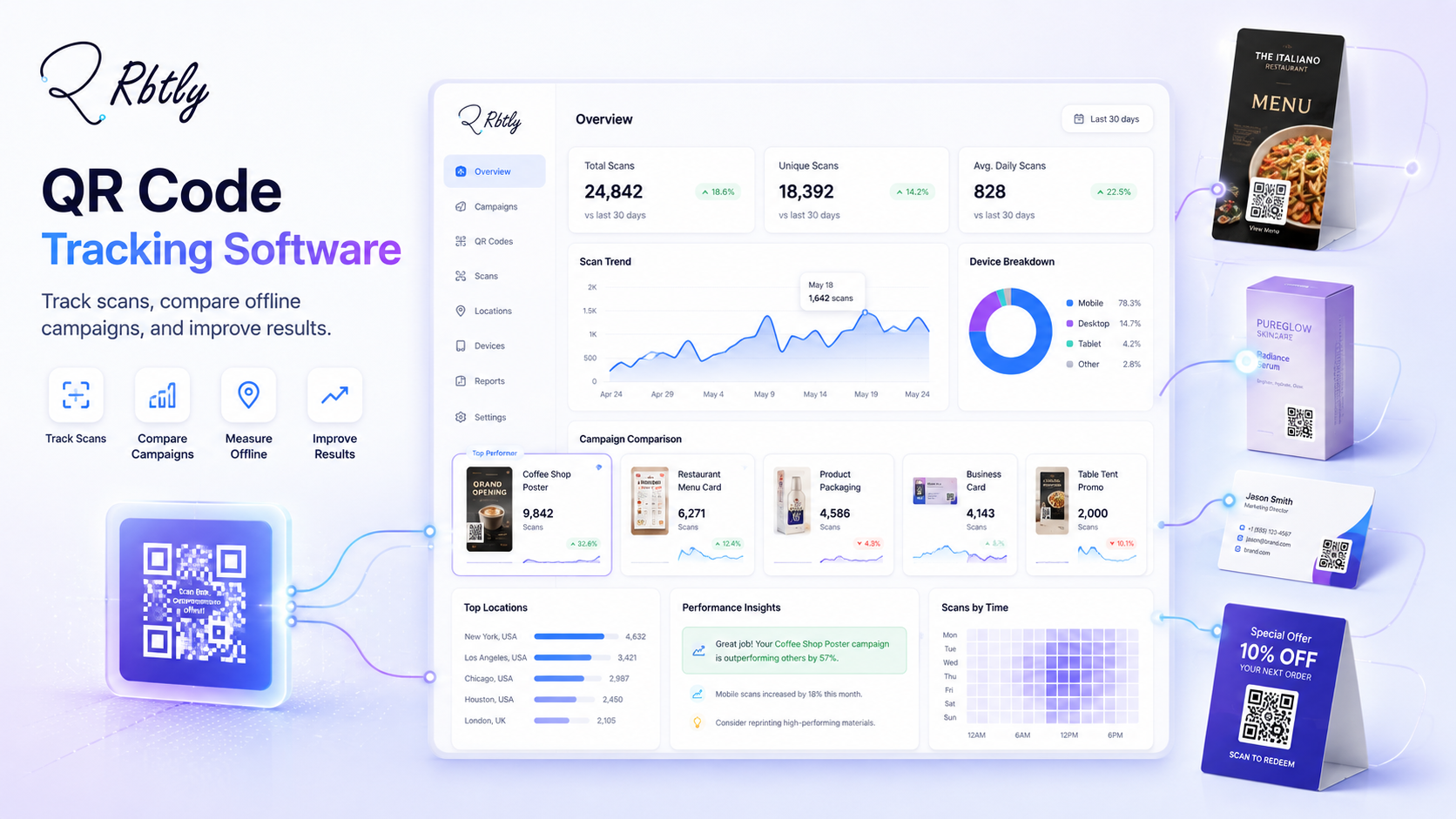
After some time, you can compare performance and see which QR code received more scans.
This helps you understand where real interest is coming from and which location, channel, or design is worth investing in again.
5. Improve Campaign Performance
If you notice that a QR code on a flyer received a low number of scans, you can improve the campaign elements.
You may need to:
- Increase the size of the QR code.
- Change its position in the design.
- Add a clearer CTA next to it.
- Improve the offer itself.
- Change the landing page.
- Create a new code for a different campaign.
- Test a new design.
In this way, a QR code is not just a visual element in the design. It becomes a tool that helps you improve your marketing.
Create a trackable QR Code with Rbtly.
Static QR vs Dynamic QR: Direct Comparison
| Element | Static QR Code | Dynamic QR Code |
|---|---|---|
| Usage style | Fixed and simple | Managed inside a platform |
| Tracking and analytics | Not available in most cases | Available |
| Suitable for campaigns | Limited | Very suitable |
| Suitable for printing | Suitable only if the data is fixed | Suitable if the final version is used before printing |
| Data editing | Very limited | Possible inside the platform, but the QR code design may change and the new version must be used |
| Cost of errors after printing | High | Still requires caution if edited after printing |
| Scan measurement | Usually unclear | Helps measure scans |
| Suitable for menus | Only if the link is fixed and tracking is not needed | Suitable for restaurants and cafes |
| Suitable for flyers | Limited | Suitable for measurable campaigns |
| Suitable for reporting | Weak | Helps provide performance reports |
| Marketing flexibility | Low | Higher than Static QR |
The summary:
Static QR is suitable for simple and fixed uses.
Dynamic QR is better for campaigns, tracking, and analytics.
Why Is Dynamic QR Better for Marketing?
The biggest value of Dynamic QR is management, tracking, and analytics.
In marketing, you need to understand performance.
Did the QR code on the flyer get scans?
Is the digital menu being opened?
Is the in-store poster generating interaction?
Did the business card bring visits?
Did the QR code on packaging encourage customers to visit the offer?
Dynamic QR helps you answer these questions.
That is why Dynamic QR is better for campaigns. It gives you data that helps you make better decisions.
Create a trackable QR Code with Rbtly.
Practical Examples of Static QR Use
1. Wi-Fi Details
If you want to share Wi-Fi details in an office, home, or fixed location, Static QR can be suitable.
The content is fixed and usually does not need analytics or campaign management.
2. Fixed Text
If you want to show simple fixed text, such as instructions or an identification number, Static QR may be enough.
3. Long-Term Fixed Link
If you have a page that never changes and you do not need to track performance, Static QR can work.
However, you should always make sure the link is correct before using or printing it.
Practical Examples of Dynamic QR Use
1. QR Code for a Restaurant Menu
Restaurants and cafes are among the businesses that benefit most from QR codes.
A QR code can be placed on:
- Tables.
- Counters.
- Printed menus.
- Flyers.
- Offer cards.
- Storefronts.
Dynamic QR helps the restaurant track how many people opened the menu or offer.
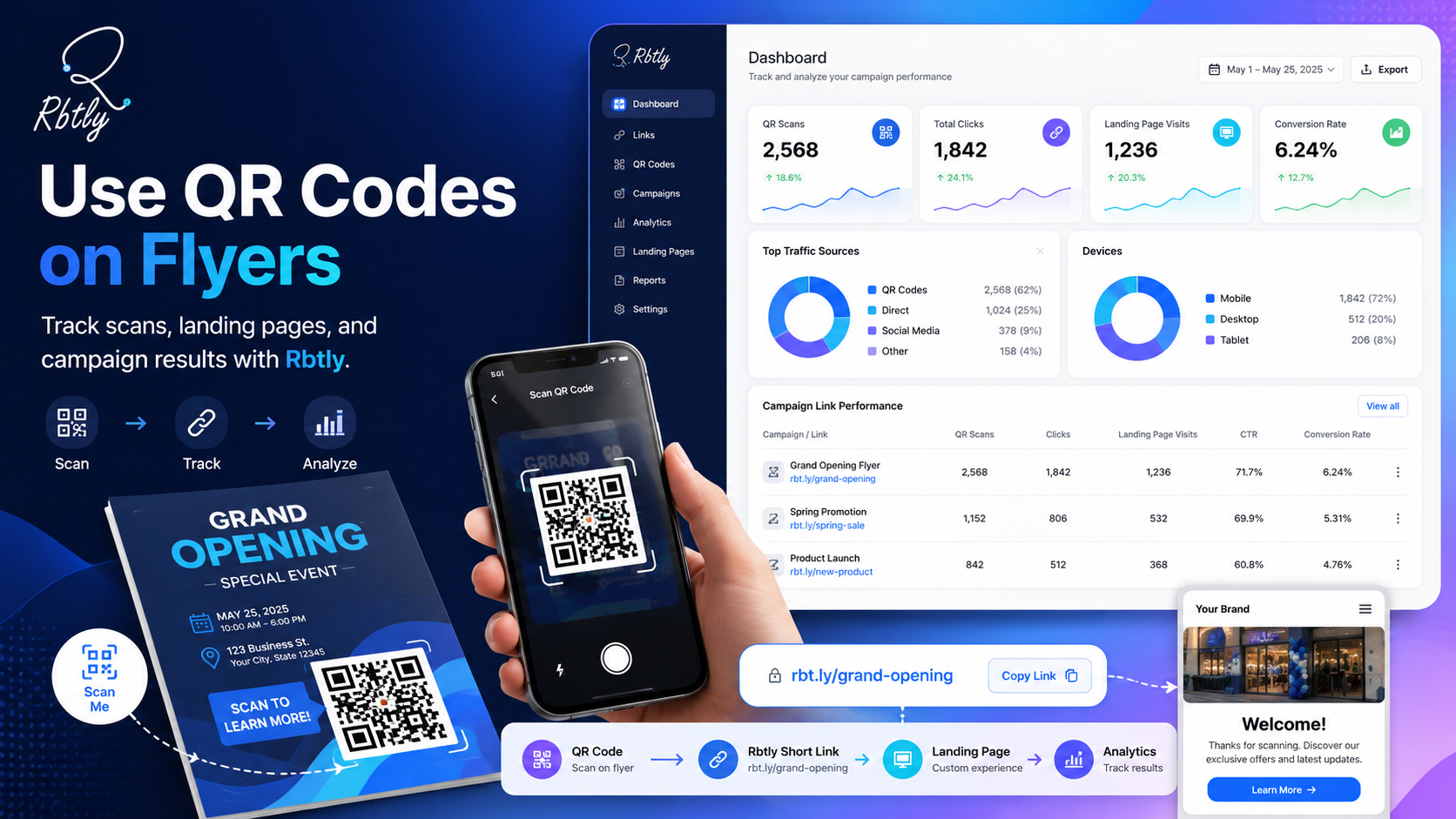
2. QR Code for Flyers
A flyer should not be just a nice design.
If you add a trackable QR code to it, you can understand whether people interacted with the campaign.
For example:
A restaurant distributes a flyer with a QR code for a special offer.
After one week, it can see how many people scanned the code and whether the campaign is worth repeating.
3. QR Code on a Business Card
A business card can direct people to a page that includes:
- An introduction about you.
- Your services.
- Contact methods.
- Portfolio.
- WhatsApp link.
- Social media accounts.
Using Dynamic QR helps measure interaction with the business card.
4. QR Code on Packaging
If you have a product that is sold or delivered to customers, you can place a QR code on the packaging that directs them to:
- A new offer.
- A review page.
- Product instructions.
- WhatsApp link.
- Loyalty program.
- Order tracking page.
Dynamic QR is useful here because it helps measure interaction with the packaging.
5. QR Code for Events
At events, QR codes can be used for registration, schedules, speaker pages, download links, or post-event surveys.
Dynamic QR helps track the number of scans and understand attendee engagement.
Create a trackable QR Code with Rbtly.
Why Dynamic QR Matters in the Egyptian Market
In the Egyptian market, many businesses depend heavily on Facebook, Instagram, WhatsApp, and printed materials.
This is where Dynamic QR becomes especially useful because it connects offline marketing with online action.
Examples include:
- A restaurant placing a QR code for its menu and offers.
- A cafe placing a QR code on the table.
- A teacher adding a QR code to a revision sheet.
- An educational center using QR codes for registration.
- A clothing store adding a QR code to a bag or card.
- A designer adding a trackable QR code to a client flyer.
- A clinic using a QR code for booking or location.
- A coach using a QR code for a program page.
- An event or exhibition using a QR code for registration or downloads.
In all these cases, a QR code should not be just a visual element.
It is better when it is measurable, so you can know whether people actually used it.
How to Use Dynamic QR in a Simple Campaign
Let’s say you own a small business and want to run a campaign using a new flyer.
You can follow these steps:
- Create a simple page for the offer.
- Create a QR Code through Rbtly.
- Connect it to the right link or page.
- Test the QR code on more than one device.
- Make sure the page opens correctly.
- Add a CTA next to the code, such as “Scan to view the offer.”
- Approve the final version of the QR code.
- Add the code to the design.
- Print the flyer.
- Track scans after distribution.
- Use the results to improve your next campaign.
This way, the flyer is no longer just a printed paper.
It becomes a marketing channel that can be measured and improved.
Create a trackable QR Code with Rbtly.
Important Tips Before Printing a QR Code
Before printing any QR code, follow these tips.
1. Test the Code on More Than One Device
Try the QR code using more than one phone and more than one camera or QR reader app.
2. Confirm the Final Link
Open the link and make sure it works correctly and that the page is mobile-friendly.
3. Use a Clear Size
Do not make the QR code too small. It should be clear and easy to scan.
4. Leave White Space Around the Code
A crowded design around the QR code may make scanning harder. Leave enough white space around it.
5. Add a CTA Next to the Code
Do not place the QR code alone without explanation.
Use a clear sentence such as:
- Scan to view the menu.
- Scan to get the offer.
- Scan to register now.
- Scan to contact us.
- Scan to view the details.
6. Track Results After Publishing
If you use QR codes in marketing, do not stop at printing.
Track the number of scans and learn from the results.
Common Mistakes When Using QR Codes
1. Printing the QR Code Before Testing It
One of the biggest mistakes is printing a QR code before making sure it works correctly.
Always test it before printing.
2. Using Static QR for a Campaign That Needs Tracking
If the campaign needs tracking, Static QR will not give you enough visibility.
Use Dynamic QR for campaigns you want to measure.
3. Placing the QR Code in an Unclear Position
If the code is too small, too far away, or placed inside a crowded design, people may not notice it or may not be able to scan it easily.
4. Not Giving People a Clear Reason to Scan
Do not expect people to scan the code without a reason.
Tell them clearly what they will get after scanning: menu, offer, discount, registration, details, WhatsApp, or file download.
5. Not Tracking Performance
If the QR code is part of a marketing campaign, you should track its performance.
The number of scans can tell you whether the design is clear, the offer is attractive, and the QR code placement is effective.
How Rbtly Helps You Create Dynamic QR Codes
Rbtly helps you create QR codes that can be used in campaigns and connected to smart links and analytics.
What Is a Smart Link? Normal Links vs Smart Links Explained
Through Rbtly, you can create a QR code that opens:
- A short link.
- A Bio page.
- A Landing page.
- A WhatsApp link.
- A special offer.
- A menu.
- A registration page.
- A marketing campaign.
You can also use QR codes as part of a wider system that includes:
- Short links.
- Bio pages.
- Landing pages.
- Click tracking.
- Campaign tracking.
- CTA overlays.
- Analytics that help you understand performance.
When Should You Choose Static QR and When Should You Choose Dynamic QR?
Use Static QR if:
- The link is fixed and will not change.
- The use case is simple and not marketing-related.
- You do not need performance tracking.
- You do not need reports or analytics.
- The content is just fixed text or fixed data.
- It is acceptable to create a new code later if needed.
Use Dynamic QR if:
- You want to track scans.
- You are launching a marketing campaign.
- You use QR codes on flyers, menus, or business cards.
- You want to organize QR codes inside one platform.
- You work with a client and need a report.
- You want to measure offline-to-online performance.
- You want to compare the performance of different QR codes.
- You can approve the final version of the code before printing.
If the use case is related to marketing or measurement, Dynamic QR is usually the better choice.
Create a trackable QR Code with Rbtly.
Conclusion
The difference between Static QR and Dynamic QR is not only about appearance. It is about management, tracking, and measurement.
Static QR is suitable for simple and fixed uses.
Dynamic QR is more suitable for campaigns, flyers, menus, business cards, packaging, and businesses that need to measure scans and understand engagement.
If you use a QR code in a marketing campaign, do not think of it as just a design element.
Think of it as a measurement tool.
With Rbtly, you can create QR codes and connect them to smart links, organized pages, and analytics that help you understand what happens after someone scans the code.
Create a trackable QR Code with Rbtly.
Turn your flyer, menu, business card, or poster into a campaign you can measure and improve.
FAQ
What is the difference between Static QR and Dynamic QR?
Static QR is a fixed code suitable for simple uses that do not need management or tracking. Dynamic QR is created and managed through a platform and can be used to track scans and connect QR codes to campaigns and analytics.
Does Dynamic QR mean the printed code will continue to work after any edit?
Not necessarily. Editing Dynamic QR Code data may change the QR code design, so it is important to make sure you use the final version before printing.
Which is better for marketing campaigns?
Dynamic QR is better for marketing campaigns because it helps track scans and connect the code to campaigns and analytics.
Is Static QR bad?
No. Static QR is not bad. It is suitable for simple and fixed uses that do not require tracking, management, or analytics.
Is Dynamic QR suitable for restaurants?
Yes. Dynamic QR is very suitable for restaurants and cafes because it helps track the use of QR codes for menus or offers.
Can Dynamic QR be used for flyers?
Yes. It is one of the best use cases because it helps track scans and measure engagement with the flyer.
Do I need technical experience to create a Dynamic QR?
No. Tools like Rbtly can help you create a QR code, connect it to a link, page, or campaign, and track performance without needing technical experience.